Pickleball Dinking Strategy: Win More Points at the Net
Master pickleball dinking strategy with crosscourt patterns, speed-up timing, and reset techniques. Learn the dink shots that win games at the net.
What Is Dinking in Pickleball?
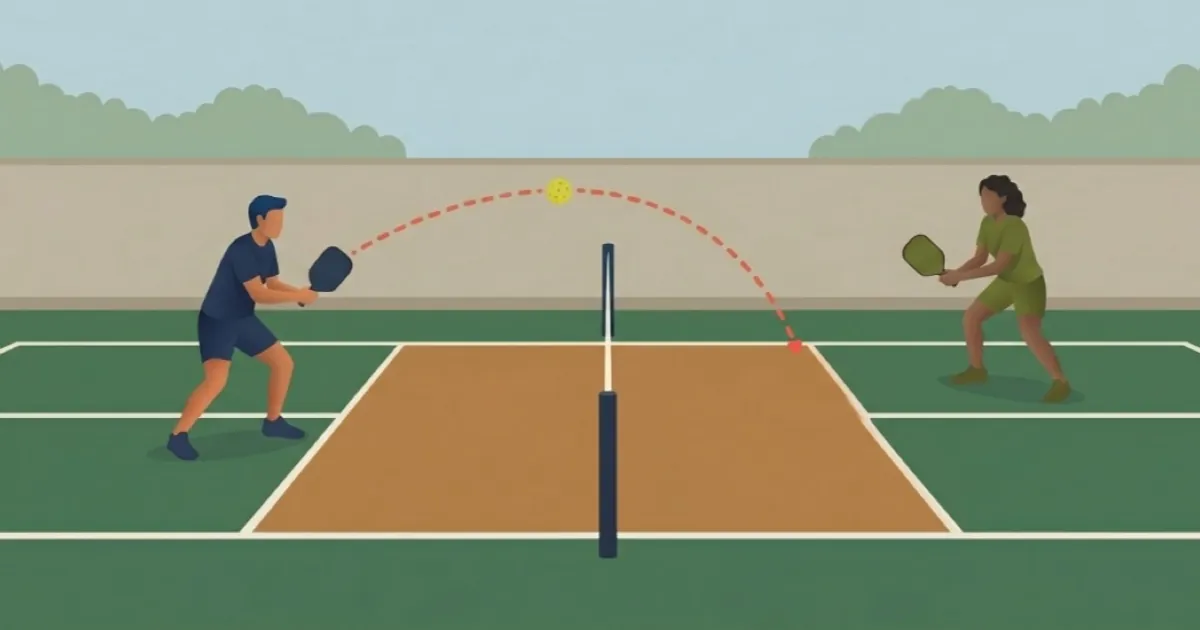
A dink is a soft shot hit from near the non-volley zone (the kitchen) that arcs over the net and lands in or near your opponent’s kitchen. It is not a flashy shot, and it will never make a highlight reel. But dinking is where intermediate and advanced pickleball games are won and lost.
The purpose of a dink is to keep the ball low and unattackable, forcing your opponent to hit up on the ball. When done well, dinking creates openings, draws errors, and sets up the shot that wins the point. When done poorly, it gives your opponent a ball they can drive at your feet or slam past you.
If you are serious about improving as a pickleball player, your dink game needs to be sharp.
Why Dinking Wins Games
At the beginner level, points are won by whoever makes the fewest errors on hard shots. As you move into intermediate play, the dynamic shifts. Players can handle pace. They can block drives. The players who stand out are the ones who can construct points with patience and placement.
Dinking wins games because it:
- Forces errors. A long dinking rally puts pressure on your opponent’s concentration and touch. Mistakes happen.
- Creates attackable balls. A well-placed dink can pull your opponent off balance, leading to a high ball you can put away.
- Neutralizes power players. If your opponent loves to bang the ball, dinking takes pace away and forces them to play your game. This is one of the key strategies for beating bangers.
- Controls the tempo. You dictate the pace of the rally instead of reacting to your opponent.
Crosscourt Dinks vs. Straight-Ahead Dinks
Understanding when to go crosscourt versus straight ahead is fundamental to dinking strategy.
Crosscourt Dinks
Crosscourt dinks should be your default. Here is why:
- The net is lower in the middle. You have more margin for error.
- The ball travels a longer distance. This gives you more time to recover and prepare for the next shot.
- The angle pulls your opponent wide. A good crosscourt dink moves your opponent laterally, opening up the middle of the court.
When hitting crosscourt, aim for the sideline area of your opponent’s kitchen. The further you push them wide, the more court you open up for your next shot.
Straight-Ahead Dinks
A dink hit straight ahead (down the line) is a change-of-direction shot that can catch your opponent off guard. Use it when:
- Your opponent is cheating crosscourt and leaving the line open
- You want to change the pattern and disrupt their rhythm
- You are targeting the player with the weaker dink game
The risk with straight-ahead dinks is that the net is higher at the sidelines, and you have less margin. If you pop it up, your opponent is right there to attack.
The Middle Dink
Do not forget about the middle. In doubles, dinking to the space between your two opponents creates confusion about who should take the ball. It can produce errors even when the dink itself is not perfectly placed.
Dinking Patterns That Win Points
Random dinking is not strategy. The best players use patterns to move their opponents around and set up winning shots.
Pattern 1: Crosscourt, Crosscourt, Down the Line
Hit two or three crosscourt dinks to establish a rhythm, then change direction and go straight ahead. Your opponent’s momentum is moving crosscourt, and the direction change often produces a pop-up or an outright miss.
Pattern 2: Wide, Wide, Middle
Push your opponent wide with angled crosscourt dinks, then hit a dink right at the middle of the court. After moving laterally, they have to change direction quickly, which is difficult at the kitchen line.
Pattern 3: Low, Low, Higher with Topspin
Hit a few very low dinks that just clear the net, then add some topspin on a dink that lands a bit deeper in the kitchen. The change in trajectory and bounce can draw a high ball that you or your partner can attack.
Pattern 4: Body Dinks
Dinking directly at your opponent’s hip or paddle-side shoulder is underrated. It jams them and makes it hard to generate a clean shot. This is especially effective against players who struggle with balls hit right at them.
When to Speed Up from a Dink Rally
Patience is essential in dinking, but knowing when to speed up is what separates good dinkers from great ones. Look for these opportunities:
- The ball bounces above the net. If your opponent pops a dink up, that is your green light. Attack with a firm volley or a roll shot at their feet.
- Your opponent is off balance. If they are lunging or leaning the wrong way after your last dink, speed up before they can recover.
- Your opponent is reaching. A player reaching for a wide dink has limited options. A speed-up to their body or the open court can end the point.
- The pattern is set. If you have hit three crosscourt dinks and your opponent is grooved in that direction, a quick flick down the line can be a winner.
What to avoid: speeding up from a low ball below the net. If you are hitting up on the ball, a speed-up is risky because it will travel upward, giving your opponent an easy counter.
Resetting with Dinks
Sometimes you are on the defensive. Your opponent has sped up the ball, and you are scrambling. This is where the reset dink becomes essential.
A reset is a soft shot that absorbs the pace of your opponent’s attack and drops the ball back into the kitchen, returning the rally to a neutral dinking state.
Keys to a good reset:
- Soft hands. Loosen your grip to absorb the pace of the incoming ball.
- Open paddle face. Angle the paddle slightly upward to lift the ball over the net softly.
- No backswing. A reset is a block, not a swing. Let the ball come to you and redirect it.
- Aim for the middle of the kitchen. Do not try to be precise with your reset. Just get it low and in the kitchen.
The ability to reset after an attack is what keeps you in points that other players lose. It is one of the most valuable skills in the intermediate game.
Dinking Drills to Sharpen Your Game
Drill 1: Crosscourt Dink Rally
Stand at the kitchen line with a partner, both on the same side (forehand to forehand or backhand to backhand). Dink crosscourt and try to keep a rally going for 20, 30, or even 50 shots. Focus on consistency and placement, not on winning the rally.
Drill 2: Dink and Redirect
Start with crosscourt dinks, but either player can change direction at any time. Once someone goes down the line, the rally continues in the new direction until someone changes again. This develops your ability to read and react.
Drill 3: Targeted Dinking
Place three targets in your opponent’s kitchen: one wide crosscourt, one in the middle, and one down the line. Have a partner call out a target before each shot. This forces you to control placement on demand.
Drill 4: Speed-Up and Reset
One player dinks while the other looks for an opportunity to speed up. The dinker must reset the speed-up and return to dinking. This trains both the speed-up decision and the reset skill.
Drill 5: Skinny Singles Dinking
Play skinny singles (using only half the court) where every shot must be a dink until one player gets an attackable ball. This drill forces long dink rallies and teaches you to construct points with placement alone.
Common Dinking Mistakes
- Standing too far from the kitchen line. If you are two or three feet back, you are giving up angle and reach. Get your toes close to the line.
- Using too much backswing. A dink requires almost no backswing. If you are taking the paddle back behind your body, you are generating too much power.
- Dinking to the same spot every time. Predictable dinks are easy to read and attack. Move the ball around.
- Trying to win the point with a dink. The dink sets up the winning shot. Be patient and wait for the right ball.
- Popping the ball up. The cardinal sin of dinking. If your dinks are consistently too high, work on keeping your paddle angle more closed and contacting the ball lower.
The Dink as a Weapon
Dinking is not a passive strategy. It is an aggressive tool disguised as a soft shot. Every dink you hit should have a purpose, whether that is moving your opponent, setting up a pattern, or drawing an error. The players who dominate at the intermediate level and beyond are the ones who out-dink their opponents.
Combine a strong dinking game with a reliable third shot drop and you have the foundation for consistent, high-level pickleball.
Looking to develop sharper dink patterns and better decision-making at the kitchen line? Coach Pickle’s AI coaches can break down your net game, identify weaknesses in your dinking strategy, and guide you through drills that build real results.
Want Personalized Coaching?
Coach Pickle gives you an AI pickleball coach in your pocket. Get strategy advice, drills, and mental game coaching tailored to your skill level.