The Mental Game of Pickleball: How to Stay Focused Under Pressure
Master the mental side of pickleball with proven techniques for focus, composure, and confidence. Learn breathing, self-talk, and routines to play your best.
The Mental Game of Pickleball: How to Stay Focused Under Pressure
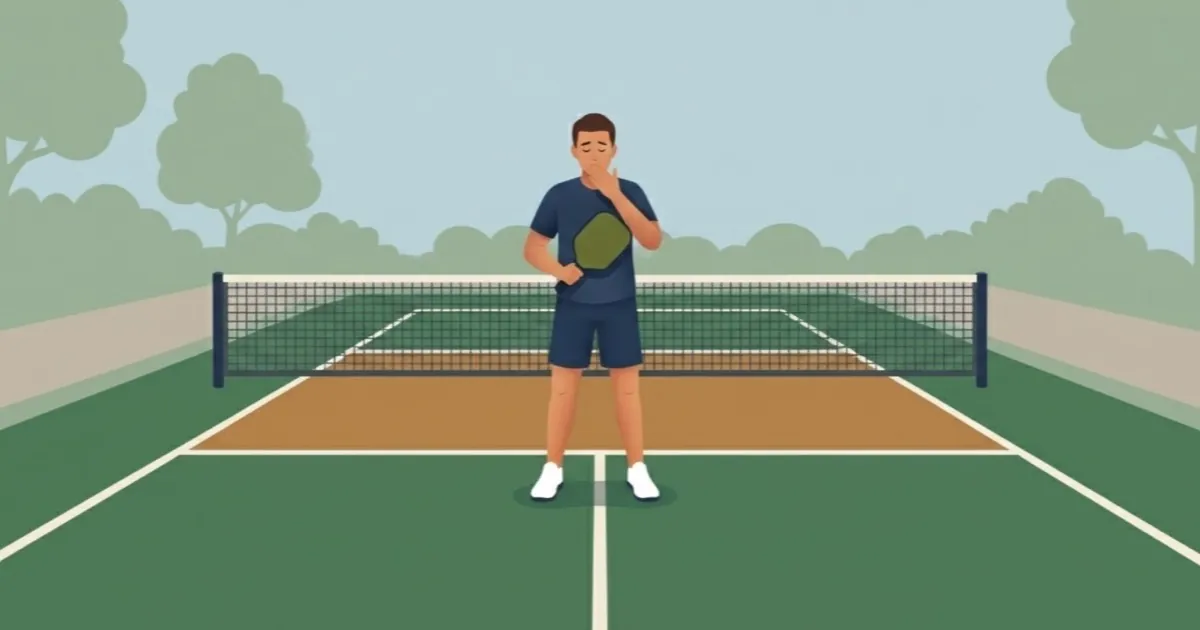
You have drilled your third shot drop hundreds of times. Your dinks are crisp, your volleys are sharp, and your serve placement is dialed in. But when the score is 9-9 in a tournament match, your hands tighten, your feet stop moving, and that drop shot you normally nail sails long. Sound familiar?
The mental game is the most overlooked and undertrained aspect of pickleball. Players at every level spend hours refining technique while ignoring the space between their ears. Yet ask any 5.0 player what separates the top competitors, and they will tell you: it is almost always mental.
Why the Mental Game Matters in Pickleball
Pickleball is uniquely demanding from a psychological standpoint. Rallies are fast, the margin for error on dinks and drops is small, and momentum can swing in seconds. Unlike tennis, where you can recover from a service break over several games, pickleball scoring makes every point feel consequential.
The mental game affects your:
- Shot selection under pressure
- Consistency during long rallies
- Recovery after unforced errors
- Communication with your doubles partner
- Ability to execute the strategies you have practiced
Developing mental toughness is not about eliminating nerves. It is about building a toolkit that lets you perform at your best when the pressure is highest.
Building a Pre-Match Routine
Every great competitor has a pre-match routine, and you should too. A routine grounds you before play begins and signals to your brain that it is time to compete.
Elements of an Effective Pre-Match Routine
- Arrive early. Give yourself at least 15-20 minutes before your match. Rushing creates anxiety before you even step on the court.
- Physical warm-up. Light jogging, dynamic stretching, and gentle paddle work get blood flowing and loosen your muscles.
- Visualization. Spend 2-3 minutes with your eyes closed, picturing yourself executing your best shots. See the ball coming off your paddle cleanly. Imagine yourself moving smoothly to the kitchen line.
- Intention setting. Pick one or two things to focus on during the match. “I will move my feet on every shot” or “I will stay patient in dink rallies” are better than vague goals like “play well.”
- Breathing reset. Take five deep breaths: inhale for four counts, hold for four, exhale for six. This activates your parasympathetic nervous system and calms pre-match jitters.
The key is consistency. Use the same routine before every match, whether it is a casual rec game or a gold medal match.
Handling Nerves and Anxiety
Nerves are not the enemy. A certain level of arousal actually improves performance. The problems start when anxiety tips past the point of helpful activation into panic or paralysis.
Reframe the Feeling
Instead of telling yourself “I’m so nervous,” try “I’m excited to compete.” Research in sports psychology shows that reframing anxiety as excitement leads to better performance because the physical sensations are nearly identical. Your body is preparing you to perform.
Use the 5-4-3-2-1 Grounding Technique
If anxiety feels overwhelming between games or during a timeout, try this:
- Name 5 things you can see (the net, your paddle, the baseline)
- Name 4 things you can feel (your grip, your shoes on the court)
- Name 3 things you can hear (the ball on another court, wind)
- Name 2 things you can smell
- Name 1 thing you can taste
This technique pulls your focus out of anxious thoughts and anchors it in the present moment.
Breathing Techniques for On-Court Composure
Your breath is the single most powerful tool you have for managing your mental state during play. It is always available, takes no extra equipment, and works in seconds.
Box Breathing Between Points
Between rallies, use box breathing: inhale for four counts, hold for four, exhale for four, hold for four. Even one cycle resets your nervous system and clears mental clutter from the previous point.
The Exhale on Contact Trick
Many players unconsciously hold their breath during rallies, which creates tension in the shoulders and arms. Practice exhaling gently as you make contact with the ball. This keeps your muscles relaxed and your strokes fluid. You will notice an immediate improvement in your touch on soft shots like dinks and drops.
Letting Go of Bad Points
The hardest mental skill in pickleball is letting go. You will hit balls into the net. You will miss easy putaways. Your opponent will hit a lucky shot that catches the line. The question is not whether bad points will happen but how quickly you can release them.
The 3-Second Rule
Give yourself exactly three seconds to react to a bad point. You can grimace, shake your head, or tap your paddle on your shoe. After three seconds, it is over. Reset your posture, take a breath, and focus entirely on the next point.
Separate Process from Outcome
A good decision that leads to a bad outcome is still a good decision. If you chose the right shot and executed it reasonably well but your opponent made a great play, that is not a mistake on your part. Judge your play by the quality of your decisions and execution, not by whether every point goes your way.
Positive Self-Talk and Internal Dialogue
The way you talk to yourself on the court has a direct impact on your performance. Most players do not realize how negative their internal dialogue becomes during a tough match.
Replace Negative Patterns
| Instead of… | Try… |
|---|---|
| ”Stop hitting it into the net" | "Lift through the ball" |
| "I always choke at this score" | "I’ve been here before and I can compete" |
| "My partner keeps missing" | "Let’s reset and get the next one" |
| "I can’t believe I missed that" | "Next ball” |
Notice that effective self-talk is short, present-tense, and focused on what you want to do rather than what you want to avoid. Your brain does not process negatives well under pressure. “Don’t hit it long” puts the image of hitting it long in your mind.
Develop a Reset Word
Pick a single word that brings you back to center. “Reset,” “breathe,” “smooth,” or “next” are popular choices. Say it to yourself (or even quietly out loud) after any point where you feel your focus slipping. Over time this word becomes a mental anchor that triggers your entire composure routine.
Staying Present During Momentum Shifts
Momentum in pickleball is real and psychological. When your opponents rattle off four straight points, it can feel like the match is slipping away even when the score is still close.
Focus on the Current Point
You cannot win a game in one point, and you cannot lose it in one point either. The only point that matters is the one you are about to play. If you catch yourself thinking about the score, the outcome, or what happened three points ago, gently redirect your attention to the present.
Control What You Can Control
During a momentum shift, focus on:
- Your feet. Are you split-stepping? Are you getting to the kitchen line?
- Your paddle position. Is it up and ready?
- Your breathing. Is it steady?
- Your target. Do you know where you want to hit the next ball?
You cannot control your opponent’s shots, the wind, or line calls. Spending mental energy on those things drains your focus from the areas where you actually have influence.
Call a Timeout Strategically
If momentum is running hard against you, use a timeout not just to rest but to break the pattern. Talk with your partner about one specific tactical adjustment. Change the pace. Switch your return position. Disrupting the rhythm is often more valuable than the rest itself.
Dealing with Difficult Opponents and Distractions
Some opponents are loud, some slow-play, and some question every line call. External distractions are part of competitive pickleball, and learning to manage them is a mental skill like any other.
The most effective approach is simple: acknowledge the distraction, then redirect. “That person is being loud. Okay. Where am I hitting my next serve?” Do not invest emotional energy in things outside the court. Every ounce of frustration you direct at an opponent is energy you are not putting into your game.
Building Mental Toughness Through Practice
Mental skills improve with deliberate practice just like physical skills. Here are concrete ways to train:
- Practice under pressure. Play points where the loser runs a sprint. Simulate tournament scoring in rec play. The more you expose yourself to pressure in practice, the more comfortable you become with it in competition.
- Meditate off the court. Even five minutes of daily mindfulness meditation improves your ability to focus and let go of distracting thoughts during play.
- Keep a match journal. After each session, write down what went well mentally and what you want to improve. Patterns will emerge that guide your mental training.
- Set process goals. Instead of “I want to win this tournament,” try “I want to execute my pre-point routine before every serve and return.”
How Coach Pickle Can Help Your Mental Game
Building mental toughness is deeply personal, and having the right guidance makes a significant difference. Coach Pickle’s Zen Master coach personality is specifically designed to help players develop the mental side of their game. The Zen Master focuses on composure, mindfulness, and the psychological patterns that hold players back, offering personalized advice for staying calm, building confidence, and recovering from setbacks during match play.
Whether you are working on advanced strategy or pushing your rating from 3.0 to 4.0, the mental game is what ties everything together. The players who master the space between their ears are the ones who consistently perform when it matters most.
Want Personalized Coaching?
Coach Pickle gives you an AI pickleball coach in your pocket. Get strategy advice, drills, and mental game coaching tailored to your skill level.